

Not long ago, being valuable at work often meant being exceptionally good at something specific.
You might have been the person who could write the best reports, build the most reliable systems, analyze the most complex data, or solve technical problems that others could not. Expertise created distance. The harder a skill was to acquire, the more valuable it became.
Artificial intelligence is beginning to reshape that equation.
Tasks that once required hours can now be completed in minutes. Research is faster. Drafting is faster. Coding is faster. Access to information is no longer limited to a small group of specialists. For many professionals, this shift has created an uncomfortable question: if technology can help everyone perform at a higher level, what will make some people stand out?
The answer has less to do with AI than most people think.
The professionals becoming indispensable today are not simply the ones using the latest tools. They are the ones who know how to create value in a world where powerful tools are increasingly available to everyone.
When speed becomes common, judgment becomes scarce
One of the most overlooked consequences of AI is that it is making execution cheaper.
This sounds like a positive development, and in many ways it is. Teams can move faster, automate repetitive work, and spend less time on tasks that previously consumed entire days. But there is a catch. When everyone becomes faster, speed alone stops being a competitive advantage.
Organizations rarely struggle because people are incapable of producing work. More often, they struggle because they are producing the wrong work. Teams build features customers do not need. Companies spend months improving processes that should have been redesigned altogether. Meetings generate activity without creating momentum.
AI has the potential to amplify this problem. A team focused on the wrong priorities can now move in the wrong direction much faster than before.
This is why judgment is becoming more valuable than execution. The ability to identify what deserves attention, what can be ignored, and what will create the greatest impact is becoming one of the most important professional skills available. While technology can help generate options, it cannot reliably determine which option matters most within a specific business context.
The people who can make those decisions consistently are becoming increasingly difficult to replace.
The value of knowing what matters
For decades, professional success was closely linked to information. The people with the most knowledge often had the strongest advantage. Today, that advantage is shrinking.
Information is abundant. Answers are abundant. AI can summarize reports, explain concepts, generate ideas, and produce recommendations within seconds. What remains scarce is the ability to interpret information effectively.
Two people can review the same data and arrive at completely different conclusions. One identifies the signal hidden within the noise. The other becomes overwhelmed by possibilities.
That difference is where value increasingly lives.
Knowing how to use AI is important, but it is quickly becoming a baseline expectation rather than a differentiator. Much like email, spreadsheets, or search engines, AI will eventually become part of everyday professional life.
What will continue to distinguish people is their ability to ask better questions, challenge assumptions, recognize patterns, and make decisions that move businesses forward.
In other words, information is becoming easier to access, but wisdom remains stubbornly difficult to automate.
Why proof is replacing credentials
Another shift is quietly taking place across hiring and career development.
It has become easier than ever to appear competent.
AI can help optimize CVs, improve LinkedIn profiles, draft cover letters, and even assist with interview preparation. While these tools can be useful, they have also made professional polish more accessible than ever before.
As a result, employers are becoming more interested in evidence.
Can a candidate demonstrate how they solved a problem? Can they explain the reasoning behind a decision? Can they show measurable outcomes rather than simply listing responsibilities?
These questions matter because organizations are increasingly looking beyond credentials and focusing on demonstrated capability. The strongest professionals are not necessarily those with the most impressive descriptions of their work. They are the ones who can clearly connect their work to meaningful outcomes.
This is particularly important in a global talent market where companies have access to more candidates than ever before. Visibility is no longer the only challenge. Credibility matters just as much.
The professionals who stand out are those who make their competence easy to verify.
Where human advantage still exists
Much of the public conversation about AI focuses on what technology can do. The more interesting question is what it still struggles to do well.
The most valuable work inside organizations is often messy, ambiguous, and deeply human. It involves navigating uncertainty, building trust, aligning teams, managing competing priorities, and making decisions when the available information is incomplete.
These situations rarely come with a clear set of instructions.
A customer problem emerges unexpectedly. A product launch underperforms. A team struggles to agree on priorities. A business faces a decision with significant consequences but no obvious answer.
In these moments, technical skill alone is not enough.
Organizations need people who can create clarity where none exists. People who can connect ideas, understand context, communicate effectively, and make thoughtful decisions despite uncertainty.
These qualities are difficult to measure, which is why they are often underestimated. Yet they are also the qualities that consistently separate high-impact professionals from everyone else.
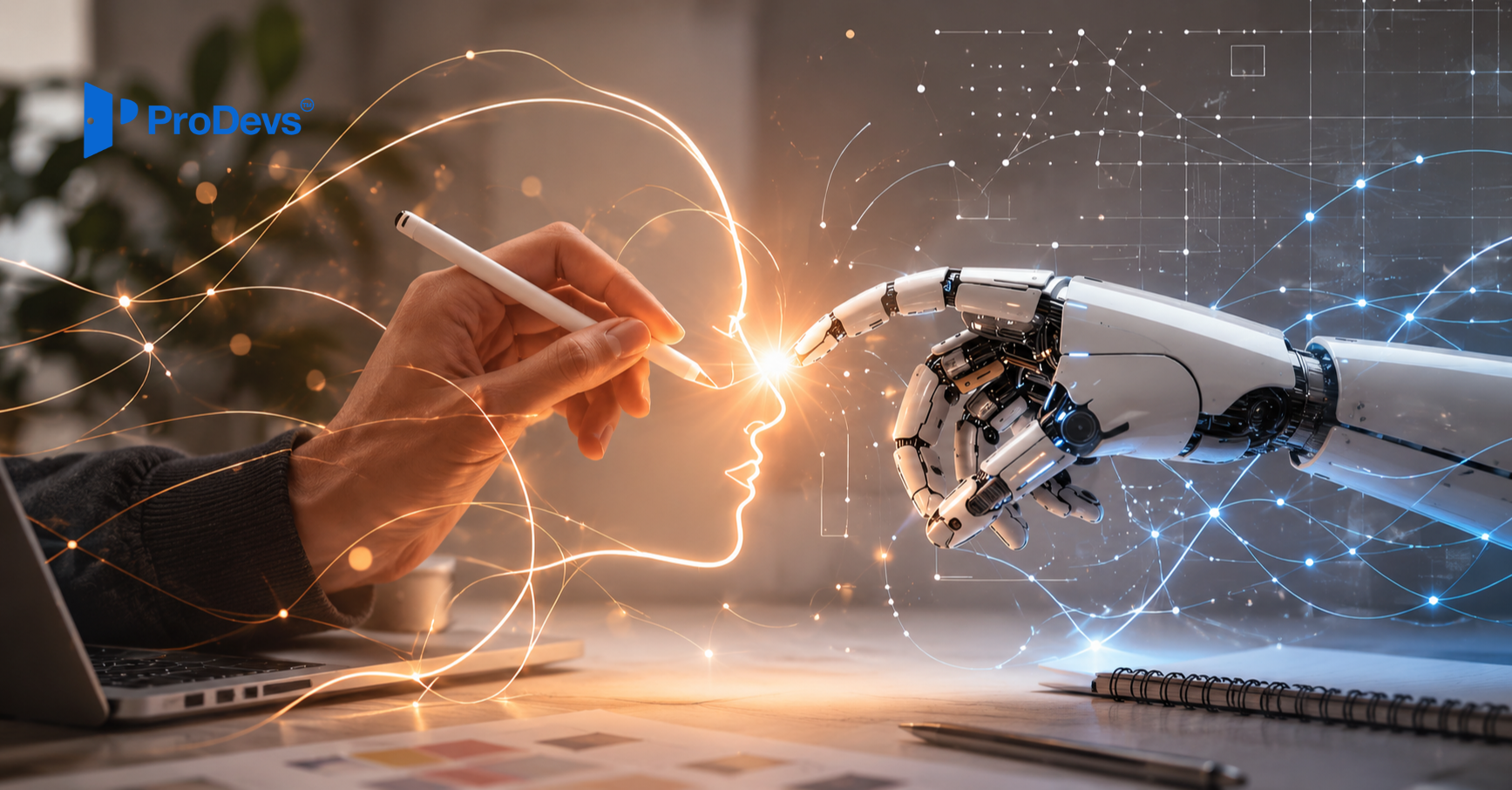
The irony of the AI era is that it is making human capabilities more visible, not less. As technology takes on a greater share of execution, the importance of judgment, adaptability, communication, and trust becomes easier to recognize.
That is why becoming indispensable has less to do with mastering every new tool and more to do with developing the qualities that tools cannot easily replicate.
The professionals who thrive over the next decade will not be the ones trying to compete with machines. They will be the ones who understand how to combine technology with sound judgment, clear thinking, and a deep understanding of what creates value.
Because in a world where intelligence is increasingly accessible, the ability to apply it wisely may become the rarest skill of all.